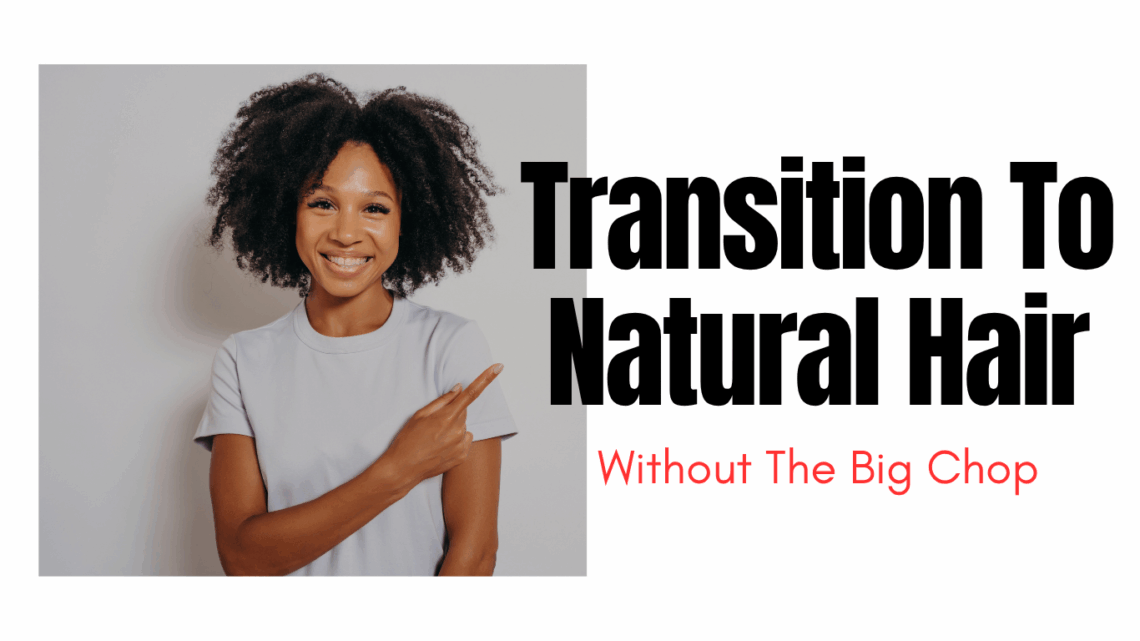
Transitioning To Natural Hair Without The Big Chop
When someone says they are transitioning to natural hair it means they are growing out any relaxed or damaged hair to reveal their natural texture (3c, 4a, 4b, 4c etc). Even if you’ve never used a chemical straightener, if you’ve experienced hair damage and wish to reclaim your original curl pattern, you too are a transitioner.
You have the choice to transition over a period of time or do a big chop. A big chop is when you cut off all relaxed or damaged hair at once. Big chops are for those of us brave enough to embrace an entirely new texture and style quickly.
If the idea of a TWA aka teenie weenie afro makes you nervous, you’re in the right place. This article will focus on how to transition to natural hair without a big chop. For reference, I’ve been natural for 14 years and transitioned for a full year and a half before finally chopping off the remainder of my relaxed ends.
Some of the links in this post are affiliate links, meaning that if you click through & make a purchase, I will receive a small commission at no extra cost to you. Thank you for your support!
How to Start Transitioning to Natural Hair
The short version is you simply stop using the relaxers or overly manipulating your hair with heat. In the next section, I’ve outlined a few sample versions of what your transitioning to natural hair journey could look like. These styles worked well for me and allowed me to grow my hair out faster and have a lot more fun doing it.
How To Blend The Two Textures
Many people will tell you to avoid heat when transitioning but that doesn’t have to be the case. The easier way to transition to natural without doing a big chop is to use heat strategically.
One of the issues transitioning naturals face is trying to blend two different hair textures. Hair will often break off at the line of demarcation which is where the two textures meet. This results in a poor transitioning experience. Below are a few ways you can use heat to reduce the breakage.
Styling With Rollersets
One way that I’ve found to be useful is to do roller sets on your hair and sit under the dryer. This way you’re using the tension of the roller and not the blow dryer comb to manipulate your curl pattern. This is far less damaging and allows for the two textures to blend easier. At night you can wrap your hair to maintain the style.
The Tension Method Blowout
If you haven’t got the time or patience for a roller set, you can dry your hair using the tension method. To do the tension method, pull your sectioned wet hair straight and use the heat of the dryer up and down each section without the comb attachment until dry.
This will help blend the two textures without manipulating your curls with the comb attachment on the dryer. After the tension method you can either do a twist out or a braid out.
Best Hairstyles for Transitioning Hair
The Braid and Curl
This was one of my favorite styles early in my transitioning journey. All you have to do is braid your hair in sections up to the end of your new growth and then use a flexi rod or perm rod on the remaining straight hair. You have the option to air dry overnight (very uncomfortable but beauty is pain lol) or sit under a hooded dryer. Once dry, separate gently and voila.
I only recommend this style for those of you with a few inches of either new growth or relaxed ends left. Any more than that and the style runs the risk of looking tacky with half the hair in a braided texture and the other half a bouncy curl.
Braid outs and Twist Outs
Braid outs and twist outs are a heat free way to blend the two hair textures. Another bonus is that you can start from damp or dry hair.
For a fuller look, do less braids or twists. For a more defined look, do more braids or twists. I find that the transitioning hair looks better on the fuller side vs defined. The damaged hair is usually much thinner and a braid or twist out on textured hair looks very different on straight hair.
Going with larger sections helps the style look more unified. Anywhere between 5-8 braids or twists should do the trick. Be sure to gather the hair at the crown into one braid or twist to avoid having a very visible part in the back.
Your Transitioning Hair Care Routine
When you’re newer in your transitioning journey, most of the hair on your head is still chemically straight so you will want to focus mainly on keeping your hair moisturized and your scalp clean.
Your roots may be a bit of a challenge as they first begin to grow out and it is imperative that you only detangle your hair when it’s wet and use products with lots of slip.
This is a great time to begin experimenting with cowashing, washing with conditioner only. In this phase, water is also your best friend as it infuses the hair with plenty of moisture and will help to grow out your hair faster.
Once your hair is clean and moisturized, you can choose any of the transitioning styling options mentioned above.
Best Products For Transitioning to Natural Hair
Most of the products geared toward textured hair will work just fine for your straight hair so I’d suggest prioritizing your new texture when choosing products.
Your cleansers should be sulfate free. This will keep tangles at bay especially around the line of demarcation.
Pick a conditioner that has plenty of slip and invest in a good deep conditioner as well. This is also the stage that you will detangle. A wide tooth comb or detangling brush work best. Go for high quality on these tools. This article shares some of my favorite detangling tools.
Last is your choice for leave-in conditioner and a styling product. These two products will be your biggest area for experimentation and which products you choose depend on the style you are going with.
My favorite styling product is the classic eco styler gel. It holds well without having a hard finish and is alcohol free. A great leave-in to start with is the TGIN leave-in conditioner. This one is the perfect balance of moisture without being too thick and greasy for your relaxed hair.
Congratulations on deciding to transition to natural! This was one of the best decisions I made and I love my natural curls. If you have any questions, leave a comment below. I’m happy to help.
FAQ’s
6 months to a year. Depending on how fast your hair grows you may want to stretch it out longer. I transitioned for 1.5 years before doing a final chop of my relaxed ends. At that point my natural hair was bra strap length when stretched.
If you are ok with having a shorter hair style for a time, you can big chop. If that feels like too much change all at once, transitioning slowly is best.
Keep your hair moisturized and only detangle when wet. When you detangle start at the ends and work your way up to the roots. Detangle gently with your fingers or detangling tool.
Braided or twisted extensions, braid outs, twist outs and braid and curls.
You should wait until your relaxed ends are gone before doing a wash and go. Your natural hair curl and the curl/wave of your relaxed ends aren’t likely to match.
I chose to do a trim every two months as my natural hair grew out. I would usually take off an inch or two. My relaxed hair was waist length and I transitioned for 1.5 years for reference. At the 1.5 year mark I chopped off several inches since I was finally happy with the length of my natural hair.
Lots of water. Wash your hair and deep condition weekly to keep the hair elastic and more resilient to breakage.
Not with proper hair care. You should be doing your hair care routine weekly and focusing on moisturizing your hair.

Wash and Really Go
I am a wash and go enthusiast helping busy women to master thier curls. I focus on all aspects of the wash and go including cleansing, moisturizing, styling, products and tools to help naturals complete thier hair care routines as quickly as possible while maintaining healthy hair.